West Virginians for Public Lands
June 2026
Welcome Back!
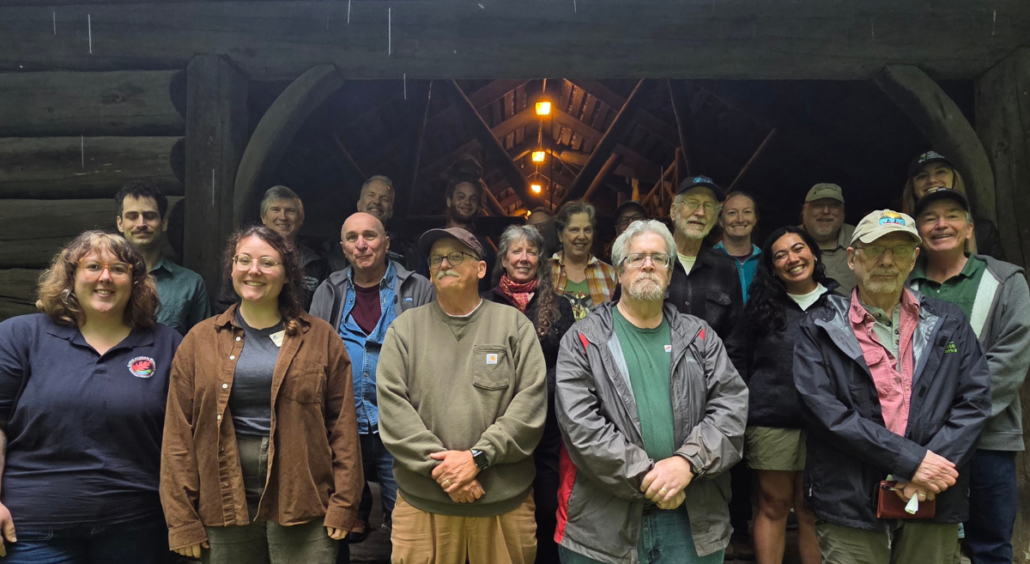
Members of West Virginians for Public Lands. May 2026.
It’s been a while since we sent out a news update. As we begin summer, looking forward to all the great times outdoors, we want to bring you up-to-date on news from both Charleston and Washington – and let you know what we are doing.
Recently we hosted our annual in-person meeting along the Shavers Fork. There was light rain on and off, but that did not stop 25 public lands advocates from gathering.
We enjoyed a panel about forest issues and six “lightning round” presentations about current public lands issues:
- Details about the Allegheny Trail (WV’s longest trail!)
- Developments and new opportunities for the Dolly Sods Stewards
- Vehicle/wildlife crashes and some possible plans to alleviate these risks
- Efforts to gain permanent Wild and Scenic Rivers designations for 16 headwaters in the Mon Forest
- Sierra WV public lands committee and their recent successful public meeting about the roadless rule
- WV Trail efforts to build a framework for revising the WV trail plan.
We asked questions and got involved in the conversations. Most importantly, we enjoyed the opportunity to chat, catch up, and learn what everyone is doing.
We ended the meeting celebrating the energy and planning for the year.
Most importantly, we remember that one reason the legislature was relatively quiet on public lands issues this session is because West Virginians care deeply about their public lands — and aren’t shy about letting lawmakers know when proposals would put them at risk.
Never forget, your advocacy matters! Below is a quick recap of legislative updates at the state and federal levels.
Quiet in Charleston, But Keep Your Eye on Washington
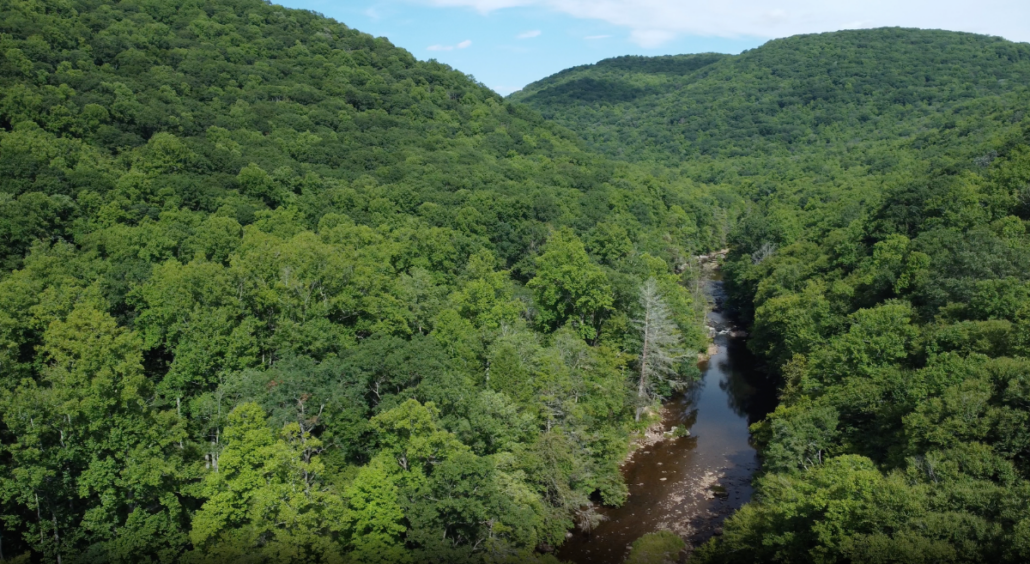
Our beautiful headwaters in the Mon Forest.
Usually, the West Virginia Legislature presents one or more challenges to our public lands. During this session, a couple of bills were filed threatening to expand motorized trails in our State Parks and Forests. Fortunately, none of these bills “moved.” That means they did not get a hearing in a committee or considered by the Senate or the House on the floor. There was also a good bill that would have increased river access. Unfortunately, it did not move either. Some groups are now working with the sponsor of that bill to try again in the 2027 legislature.
You might have noticed that we did not ask you to write your representatives about public lands issues as much as we have in years prior.
With no active threats to our public lands, we it didn’t feel like it was necessary for all of us to take action.
Still, stay ready. We closely monitor every bill that could affect the public lands we all care about, and when action is needed, we’ll let you know how you can help stop harmful proposals and support policies that strengthen our public lands and improve access to them.
Nationally, however, we are very concerned about all the proposed changes to the Forest Service, and how those changes impact our West Virginia Monongahela National Forest (Mon Forest) and the George Washington and Jefferson National Forest.
- The current administration is attempting to dismantle the National Forest Service, reduce public comment opportunities, and end the roadless rule area for some of our best forest areas.
- There is also an opportunity to work for Wild and Scenic River designation for 16 headwaters in the Mon Forest. (More on that below!)
The rest of this update will be about these concerns and opportunities in the Mon Forest.
Action Needed: Roadless Rule Revocation
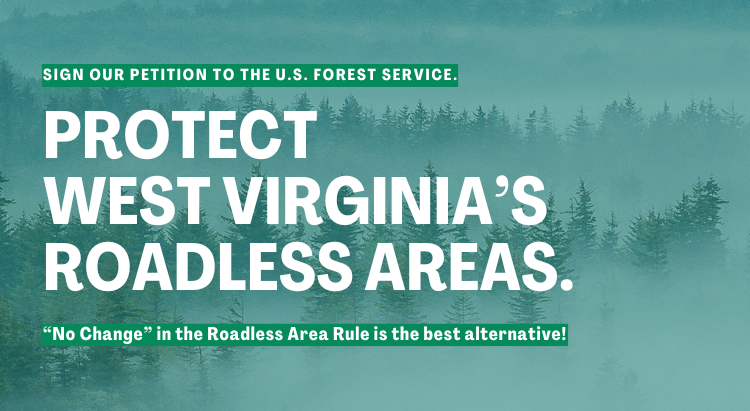
Did you know there are 182,000 roadless acres in West Virginia?
The administration has been working for a year to revoke the Roadless Area Rule (Roadless Rule). The Roadless Rule was put in place in 2001. It was implemented after a 1.5-year process, with about 600 public meetings, and over 1.5 million public comments (the vast majority in support of the Rule). Care was taken to get the Roadless Rule correct.
As long as it is in place, the Roadless Rule helps protect more than 44.8 million acres of our national forests located in 37 states.
Removing Roadless Rule protections harms forests all across America. Imagine not protecting the massive old growth in Tongass National Forest in Alaska, Wyoming’s Bridger-Teton National Forest, or the remote ancient forest landscapes of the White Mountain National Forest in New Hampshire.
Regarding the proposed revocation of the Roadless Rule, the administration held no public hearings and gave folks only 21 days to comment on the scope of the Environmental Impact Statement (EIS). Even with that limited opportunity to participate, more than 1,000 of you signed our petition opposing the the revocation.
Here in West Virginia, out of over a million acres of national forest, there are 182,000 roadless acres. The Monongahela National Forest (“Mon Forest”) has the largest share of 162,000 acres and the George Washington and Jefferson National Forest (“GWJ Forest”) has about 20,000 acres. Roadless areas in West Virginia include some of the most iconic landscapes in the state: Roaring Plains, Seneca Creek, Cheat Mountain, Canaan Loop, Tea Creek, North Fork Mountain, and Hills Creek Falls. The vast majority of roadless areas are managed for recreation: hunting, fishing, hiking, mountain biking, and dispersed camping.
The release of the EIS is expected any day. We also expect only a very short time to comment. We are ready to oppose this decision.
Work with us to protect our West Virginia National Forests.
Other Forest Service Challenges
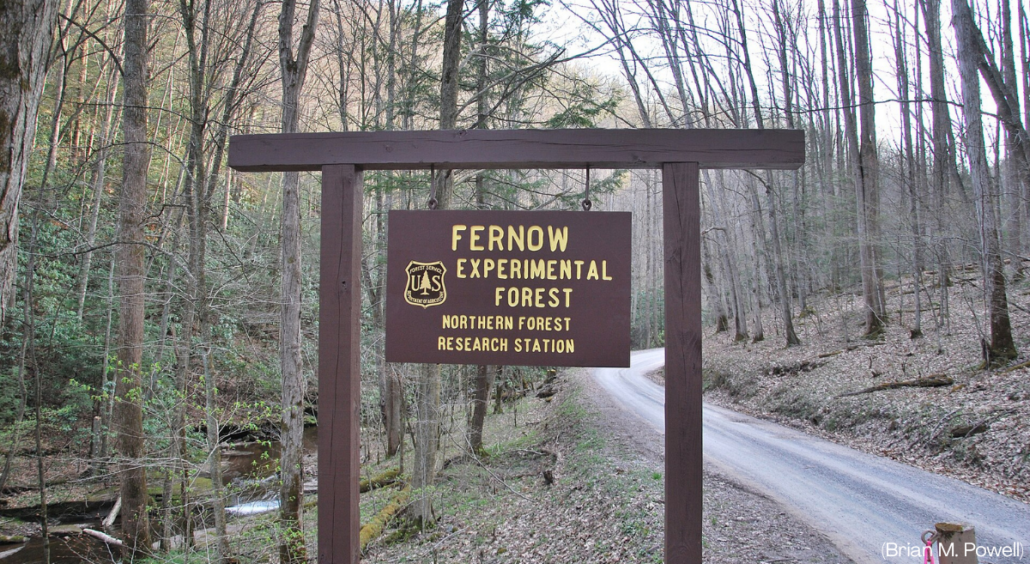
Entrance to the Fernow Experimental Forest in Monongahela National Forest. Photo by Brian M. Powell.
The administration is not stopping at attempting to repeal the roadless rule.
The administration announced its forest reorganization on March 31, 2026. The plan will move the forest service from Washington, DC; end its regional offices; and cutting research facilities.
Here in the Mon Forest, the Fernow Experimental Forest will be eliminated. Forest staff will have no regional offices to seek expert guidance when issues arise.
Also, the administration has proposed a rule to drastically reduce comment times, and to avoid the EIS and EA requirements by increasing the use of Categorical Exclusions. The reason is to avoid public comments and participation, and to fast-track timbering decisions to the detriment of the other missions of the Forest Service.
Remember, Congress can stop this reorganization. The best way to stop this reorganization and to keep public comments meaningful is to call your West Virginia Senators and Representatives
- Senator Capito (202) 224-6472
- Senator Justice (202) 224-3954
- Representative Miller (202) 225-3452
- Representative Moore (202) 225-2711
Tell them how you use and love the Mon Forest – and ask them to protect the Forest Service and the public’s right to comment.
Forest Service Opportunities
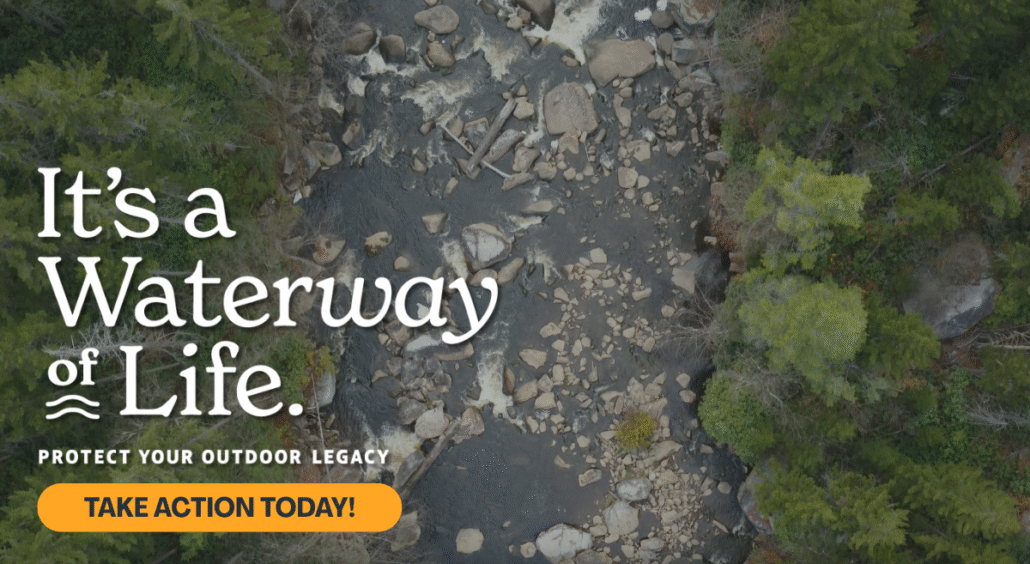
Nearly 2,000 people have taken action. If you haven’t already, you can add your name to our petition to protect your outdoor legacy.
Our Mon Forest is beautiful. The heartbeat of the Mon Forest is its headwaters – waterways that provide drinking water, protect endemic West Virginia species like the Hellbender and Candy Darter, and provide recreational opportunities for paddling, fishing, or simply walking along these remarkable waterways.
The Mon Forest Service says 16 of these waterways are eligible for Wild and Scenic River protections.
We are working to protect these waterways through a campaign called “It’s a Waterway of Life.”
We are getting good responses from our West Virginia Senators and Delegates. Taking 1,800 of you with us to DC on the petition in support of Wild and Scenic Rivers designations was powerful. However, the bill is not filed, yet.
We are in production now of a video highlighting these waterways. We will be having screenings of the video in Mon Forest Towns this summer. Watch for the announcements of these screenings!
Forest Service Opportunities
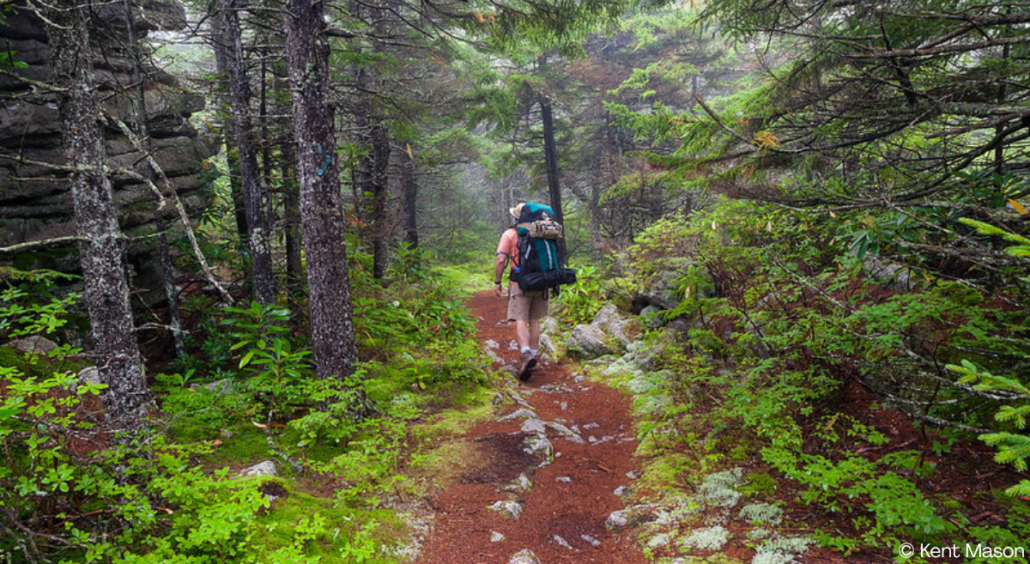
A hiker walks along a trail. Photo courtesy of Kent Mason.
In addition to the video screenings of the Wild and Scenic video, we will be at events across the Mon Forest this summer and fall.
- June 19-20 – Cacapon River Fest in Capon Bridge
- September 4 – Marlinton First Friday
- Sept 30 – Oct 3 – Mountain State Forest Festival in Elkins
Come and find us. We have lots of stickers including our new Golden Goose sticker about the values of public lands. We will also have advocacy opportunities for you to send a postcard to West Virginia’s Senators and Representatives to protect the Roadless Rule and to protect our Forest Service. And we will have postcards for you to tell your national elected officials why you love the Mon Forest and ask for Wild and Scenic protections for our Mon Forest headwaters.
See you in nature!
Follow West Virginians for Public Lands on Social!
Be sure to tag WVPL on your pictures this summer! Use #WVPublicLands for any local, state, or national public land, and use #MonForestHeadwaters when you enjoy a Mon Forest headwater. Check us out here:
- Facebook: wvpubliclands
- X (Twitter): @wv4publiclands
- Instagram: @wvpubliclands