Technical Advisory Council
West Virginia Rivers Coalition’s Technical Advisory Council (TAC) brings together scientists and policy professionals with expertise in water quality, hydrology, fisheries and wildlife biology, public health, environmental data science, and water policy and regulation. Drawing on experience from universities, government agencies, and the private sector, council members provide scientific and technical guidance to support WV Rivers’ work protecting West Virginia’s rivers, streams, and drinking water. View the TAC’s charter documents here to learn more about the council’s purpose, structure, and role in supporting WV Rivers Coalition’s work.
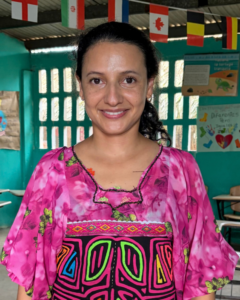
Jessica Osorio Atehortúa
Jessica Osorio Atehortúa is a microbiologist and bioanalyst with a master’s degree in biology. She is interested in how environmental conditions, including water quality, affect human health and disease transmission. Through her work in public health, she has designed and implemented interventions as well as surveillance and monitoring protocols. She has also worked with government partners and communities to turn scientific evidence into practical recommendations. Jessica cares deeply about nature and the protection of water, and she is glad to support WV Rivers’ work at the intersection of water science, conservation, and public health.
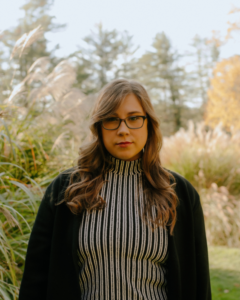
Brooke Baker, PhD
Dr. Brooke Baker, Ph.D., is an Appalachian scholar and activist. She is also an Assistant Professor in the School of Social and Behavioral Sciences at Marymount University. She is also co-founder of Unified Outreach, a scholar-led mutual aid initiative that seeks to bring mutual aid events and principles to academic spaces. Her research focuses on rural criminology and crimes of the powerful, particularly how state and corporate crime shape the environments, economies, and political systems our youth will inherit. Brooke’s work is largely influenced by her upbringing in the coalfields of central Appalachia. She spent much of her childhood, and spends a considerable amount of her time today, in and on the banks of the New River, as well as countless other waterways throughout West Virginia and other parts of Appalachia. She believes in practicing collective care and protection of these waterways and the countless species that call them home.
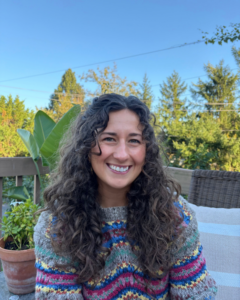
Grace Dever
Grace Dever grew up in Lakewood, Ohio, along Lake Erie. She came to West Virginia in 2015 to attend West Virginia University, where she earned a B.S. in Environmental Soil and Water Sciences and an M.S. in Hydrology and GIS. She is currently pursuing a Ph.D. in Geography and works as the Assistant Director of the WVU Center for Resilient Communities, where she supports research and community partnerships focused on addressing environmental vulnerability and building more resilient communities. Grace’s research explores how geographic data, community knowledge, and participatory mapping can be used together to strengthen environmental planning and decision-making. Her current work focuses particularly on water contamination, flood vulnerability, and creating opportunities for communities to participate in the production and use of environmental knowledge. Grace lives in Morgantown and enjoys spending time outdoors whitewater kayaking, skiing, practicing yoga, reading, and exploring the state’s rivers and watersheds with friends.
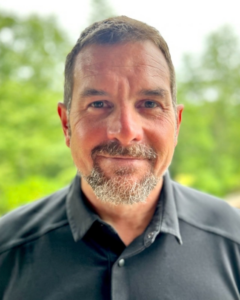
Ryan Gaujot
Ryan C. Gaujot, P.H. is a Professional Hydrologist and environmental program manager with more than 25 years of experience in water resources, environmental permitting, ecological restoration, and infrastructure development. As President of Green Rivers LLC, he leads multidisciplinary projects involving stream and wetland restoration, mitigation banking, watershed planning, hydraulic analysis, and regulatory compliance for public and private clients throughout the Appalachian region. Ryan has directed the restoration of more than 100 miles of streams and over 500 acres of wetlands while successfully managing complex environmental permitting under the Clean Water Act, NEPA, and related regulations. He holds a B.S. in Geology from the University of Utah and an M.S. in Geology from West Virginia University and is certified as a Professional Hydrologist by the American Institute of Hydrology. Ryan is committed to advancing sustainable infrastructure through science-based solutions, innovative technology, and collaborative partnerships that protect water resources while supporting responsible economic development.
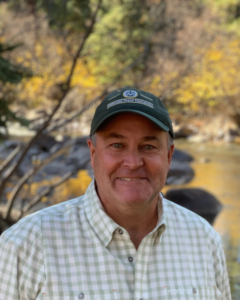
Michael Grimm
Michael Grimm served as the Associate Director for Natural Hazards, U.S. Geological Survey (USGS), leading hazards planning and overseeing six major science programs. He also spent over 26 years with the Federal Emergency Management Agency (FEMA) serving as Acting Deputy Associate Administrator with the Federal Insurance and Mitigation Administration and Assistant Administrator for the Risk Management and Mitigation Directorates.
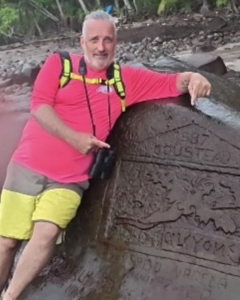
Thomas G. Jones, PhD
Dr. Thomas Jones has a 30-year background in aquatic assessment using benthic insects, crayfishes, mussels, and fishes as indicators in the Ohio River Basin. Over the last 25 years he has been teaching Environmental Science courses at Marshall University that focus on habitat assessment, bio-indicators, energy, GIS, aquatic species conservation, tropical ecology and invasive species. His BS/MS students have found careers in three areas, state/federal regulatory agencies, consulting, various NGOs that focus on education. In addition to academics and consulting work, Dr. Jones is also a PADI dive instructor with over 10K dives. Most of those have been in the Ohio River and other eastern rivers completing mussel/crayfish/fish surveys. Dr. Jones has also led 41 international trips that give students hands-on experiences in sustainable tourism and conservation on coral reefs, rainforests, deserts, mountains, and savannas.
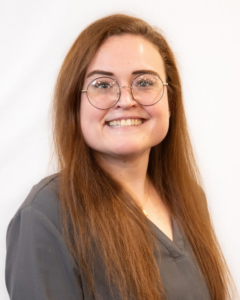
Kaylin McDermett, PhD
Dr. Kaylin McDermett is an environmental engineer with over eight years of specialized experience in per- and polyfluoroalkyl substances (PFAS) and other emerging contaminants. She earned her Ph.D. in Civil Engineering from Texas Tech University in 2022, where her research focused on understanding PFAS behavior in the environment. Kaylin is now a resident of Washington County, PA and currently works as an Assistant Project Manager at Civil & Environmental Consultants, Inc. (CEC). She also serves as the PFAS & Emerging Contaminants Technical Advisory Group Lead at CEC, where she helps clients and colleagues navigate complex environmental challenges involving investigation, regulatory compliance, and site remediation. Kaylin’s work has been featured at leading scientific and industry organizations and is recognized for translating complex technical issues into practical, actionable solutions.
Faith Reed
Faith Reed‘s passion is connecting those in need to vital resources in order to form a better tomorrow for our community. They graduated from West Virginia University with their B.S. in Environmental and energy resources Management in 2023 and their M.S. of Energy Environments in 2025. They now work as a Regulatory Advisor with the West Virginia Department of Health managing 36 counties worth of public water system data and violation statuses, working with water system operators to return their systems to compliance. In their free time Faith enjoys time with their partner and family and pets, volunteering with the West Virginia 4-H program, chasing waterfalls, and hitting the trails.
Lou Reynolds
Lou Reynolds is an aquatic biologist with over 40 years experience in various habitats and for many agencies after getting his degree in aquatic biology from Allegheny College. He worked as a water quality specialist in Florida and a fisheries technician in Tennessee, Georgia, and Oregon. Lou did a stint as a fisheries observer in the Bering Sea and 5 years as graduate assistant and student at Oregon State. He worked in the toxicity testing lab at the University of Wisconsin and published papers on novel testing procedures. After seasonal work at the PA Fish and Boat Commission, Lou spent the last 23 years of his career as a biologist at EPA’s Freshwater Biology Team in Wheeling, WV. While with EPA, Lou continued his work that he began in graduate school – developing indicators of biological integrity and advocating for the adoption of biocriteria.

Sheila M. Saia, PhD
Dr. Sheila Saia is a hydrologist and environmental engineer with over 8 years of experience working on environmental data science projects for water resources management (water quality and quantity), environmental, agricultural, and climate science applications. She is an avid R and Python coder and is passionate about all aspects of data analysis (e.g., data wrangling, modeling, visualizing, and sharing). She strives to ensure her work is reproducible, engaging, and accessible.
Jennifer Sass, PhD
Jen Sass is a Senior Scientist in the Environmental Health program at NRDC, and part-time faculty at George Washington University School of Public Health. Her scientific expertise is in cell and molecular biology and developmental biology. Her work for the past 25 years at NRDC has focused on evaluating the science and human health impacts of chemical pollutants, identifying bias in industry-sponsored studies, using science to strengthen chemical hazard and risk assessments and advocate for health protective policies and practices.
John Wirts
John Wirts retired from WVDEP in 2022 after serving as the Program Manager of the Watershed Assessment Branch. Early work with WVDEP included stream assessments, benthic macroinvertebrate identifications and IBI development, database management, report writing, and GIS work. Management duties included: working with technical and professional staff on statewide water quality monitoring efforts; development of WV’s Integrated Reports (303(d)/ 305(b)); support of permitting (water and mining) and enforcement decisions and water quality criteria development; and the coordination of program efforts with other agencies including USGS, USEPA, WVDNR, and WV DHHR.