Updates from WV Rivers Coalition
September 2026
Data Centers: Water, Power, and Community Input
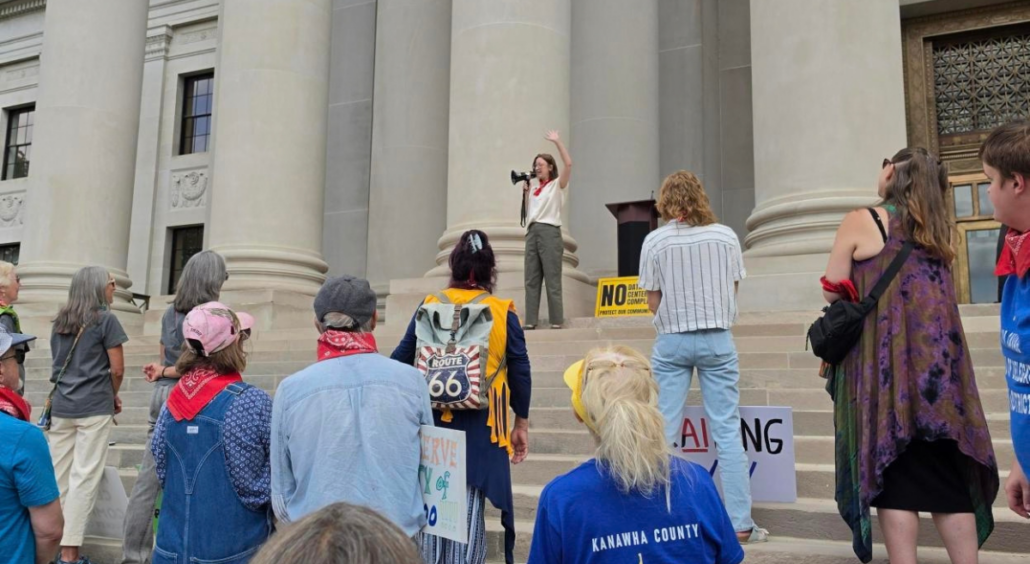
Community Engagement Manager Carrie Decker snapped this photo of WV Citizen Action Group’s Dani Parent speaking during a rally at the Capitol this month.
Large-scale data centers are being proposed across West Virginia at a rapid pace, bringing big questions about water use, electricity, flooding, local decision-making, and transparency.
WV Rivers is proud to be part of the West Virginia Data Center Accountability Project (WVDCAP), a growing coalition working to make sure communities have a meaningful voice as these projects move forward.
This month, members of our Community Engagement Team, Carrie Decker and Charlise Robinson, joined community members and partners at a rally at the State Capitol calling attention to the impacts of data center development and the need for greater accountability.
Our Senior Scientist, Than Hitt, also recently participated in a community forum in the Eastern Panhandle focused on the questions residents are asking about water, power, and local control.
As Than put it, communities need access to basic information about water risks and impacts because they are the people who live with the consequences of these projects.
During the forum, Than discussed the challenges of understanding water use when developers do not make enough information publicly available and the importance of looking at the cumulative impacts of multiple large-scale projects.
Read more about the forum in The Journal: Data center forum raises concerns over water, power, local control
We’ll continue working with communities and partners to push for water transparency, strong protections, meaningful community input, and accountability for the impacts of development.
WV DEP Extends Comment Period for Mason County Data Center’s Application for 401 Water Quality Certification
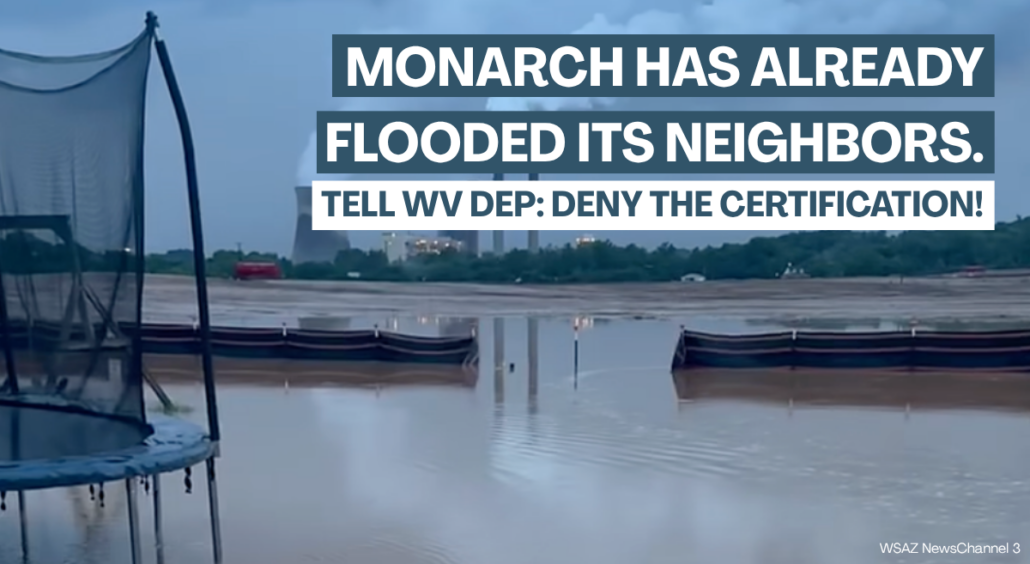
DEP has already taken enforcement action over stormwater and erosion-control problems at the Monarch construction site, including sediment-laden water reaching neighboring properties. (Image from WSAZ NewsChannel 3.)
The public comment period for Monarch Compute Campus data centers in Mason County has been extended. Once WVDEP announces the public hearing date, the public will have 30 days to continue submitting comments on the project’s proposed impacts.
Thank you to the 379 people who have already submitted a comment. Our advocacy matters!
Monarch is seeking approval to eliminate more than 28 acres of wetlands at its site. Wetlands are part of our natural flood protection system, helping slow and absorb stormwater before it reaches nearby homes and waterways. Those concerns are immediate for those who live near the site. So far, data center construction (as pictured above) has already caused flooding.
Before the new deadline, tell WVDEP to:
- Deny the Section 401 certification
- Investigate potential unauthorized wetland disturbance.
- Require effective stormwater controls.
- Consider the cumulative impacts of the full Monarch development.
Take action and tell DEP to protect Mason County’s wetlands and waterways.
New Executive Order Changes Federal Chesapeake Bay Policy

Maria captured this sunset earlier this week at Cacapon State Park: wild skies, mountain views, and a good reminder of what we’re working to protect.
Earlier this week, WV Rivers Executive Director Jennie Smith and Policy Specialist Maria Russo joined regional partners at the Choose Clean Water Coalition Steering Committee meeting at Cacapon State Park to talk about the future of Chesapeake Bay restoration and clean water.
A few days later, the administration issued a new Executive Order revoking the 2009 Chesapeake Bay Executive Order and directing federal agencies to reassess their support for Chesapeake restoration. It also calls on EPA to work with Bay jurisdictions to encourage the repeal or rescission of state and local stormwater management fees.
The Chesapeake watershed covers about 14% of land mass in West Virginia across Berkeley, Grant, Hampshire, Hardy, Jefferson, Mineral, Morgan and Pendleton counties, as well as small portions of Preston, Tucker and Monroe counties. From Dunlap Creek in Monroe County to Opequon Creek in Berkeley County, WV Rivers and our partners have spent years working to protect and restore the rivers and tributaries that flow into the Chesapeake Bay.
That work is producing results in the Mountain State. The latest Chesapeake Bay Program data show that West Virginia has achieved 100% of its 2025 reduction goals for nitrogen, phosphorus and sediment. The work cannot stop here.
Those results reflect over 17 years of collaboration by communities, watershed groups, farmers, local governments, state agencies and federal partners. We’ll continue watching how this new Executive Order is implemented and what it means for clean water efforts across West Virginia.
Water Infrastructure Must Come with Community Input
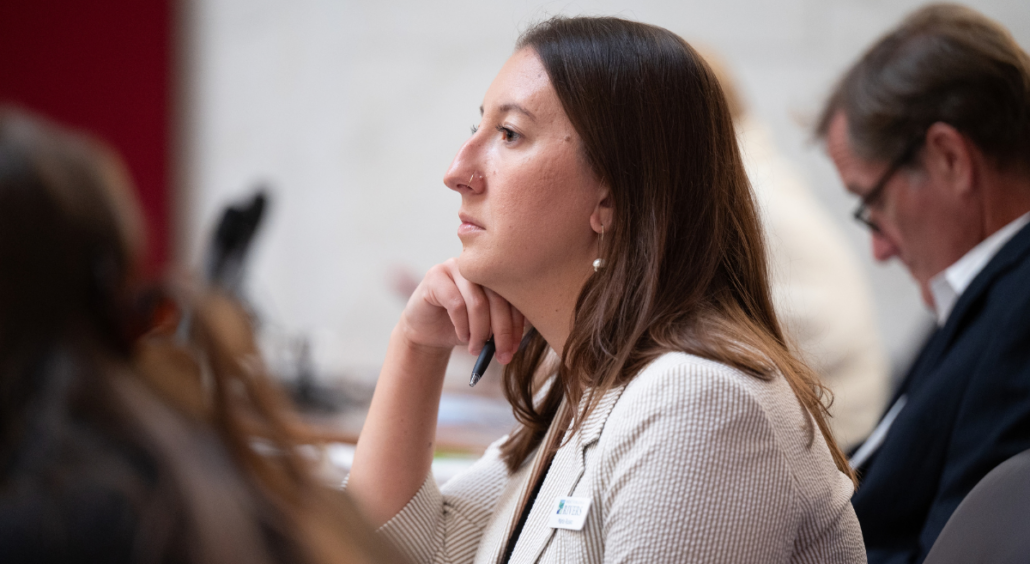
Policy Specialist Maria Russo and Technical Advisor Scott Mandirola were in Charleston this week for September Interim sessions.
During the Legislature’s interim meetings this month, water infrastructure came up during a discussion on developments in the coalfields around coal-fired plants and the workforce.
We were relieved to hear leaders bring attention to this crisis during the Joint Committee on Energy and Public Works meeting.
West Virginia has communities, especially those in the Southern region of the state, that have been dealing with failing water and wastewater systems for decades. Investment to help fix those systems are urgently needed.
Nicholas Preservati, the director of the state’s Office of Energy, responded to delegates water concerns by stating that new proposals look at directing 5% of data center revenue toward water infrastructure.
However, there are still important questions about how that money would work including:
- How would the funds be allocated?
- Who would make those decisions?
- How would communities have a voice?
- Would the investment actually reach the communities with the greatest needs?
At the same time, we have to account for the costs that new development can place on communities and water systems.
Data centers can bring significant challenges related to water quality, water quantity, flooding, electricity demand, and infrastructure. We’ve already seen flooding and stormwater problems associated with data center construction in Mason County.
West Virginia needs investment in water infrastructure, but that investment should go hand in hand with strong protections for water and communities, transparency about how funds are used, and meaningful community input.
Share Your Expertise: Join WV Rivers’ Technical Advisory Council
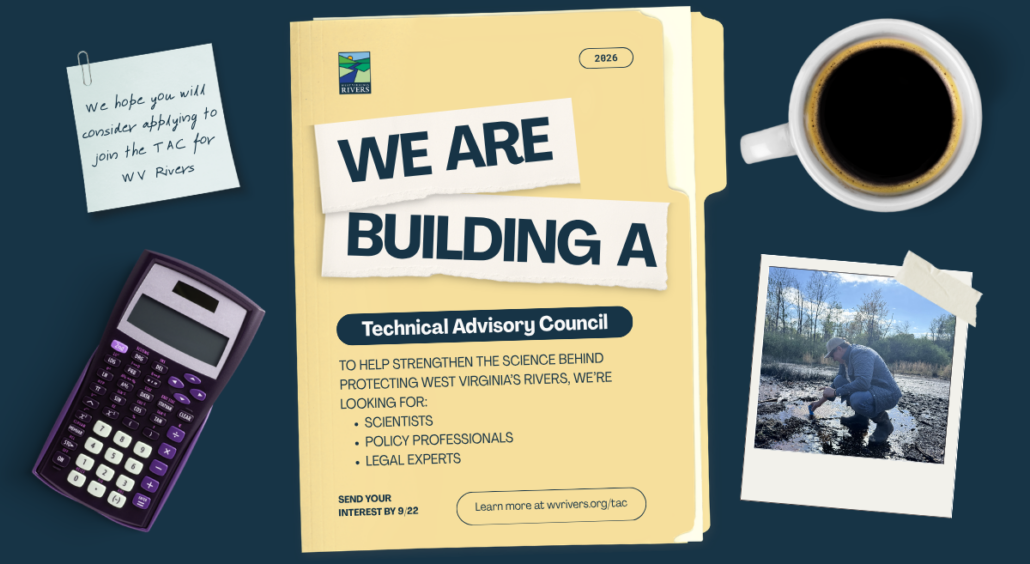
We are building a Technical Advisory Council made up of scientists, policy professionals, and legal experts to help strengthen the science that protects West Virginia’s rivers, land, and people.
West Virginia Rivers Coalition is forming a Technical Advisory Council (TAC) and seeking up to 12 experts to join our inaugural cohort.
The TAC is an independent network of scientific, legal, and policy experts who strengthen the technical basis of our advocacy, expand staff capacity, and help translate emerging research into conservation policy and public understanding. The TAC helps WV Rivers by:
- Providing technical expertise to support campaigns and programs
- Expanding the breadth and depth of expertise available to staff
- Strengthening leadership in water science and conservation policy
- Communicating science and policy to decision-makers and the public
Interested in learning more or know someone who should apply? Visit wvrivers.org/tac.
Deadline: September 22.
Meet Our August Mini-Grant Cohort

Have an idea to advocate for and protect water in your community? We want to support your effort! Our next round of mini grant applications close on October 15.
Our August mini-grants are supporting four projects that put clean water work directly into the hands of West Virginia communities:
- Coal Country Conservation Foundation: Mingo County Community Water Watch: Training 10-15 local residents as citizen scientists to monitor water quality at 8-10 sites across Mingo County, with a focus on waterways near legacy mine sites and reclaimed coal lands.
- Stewards of Potomac Highlands: Corridor H Community Organizing: Building local organizing around the proposed Corridor H expansion, with temporary organizers working to connect residents, build coalitions, and bring local voices into conversations about the future of the Potomac Highlands.
- Greenbrier River Watershed Association: Clean Storm Drains & Community Water Monitoring: Installing approximately 100 “No Dumping Drains to Cave” and “No Dumping Drains to River” labels in Lewisburg and Ronceverte, while celebrating and sharing three years of Greenbrier River water quality monitoring with the community.
- Oak Hill Middle School: Trout in the Classroom: Giving students hands-on experience with watersheds, water quality, ecology, and conservation by raising trout from eggs to fingerlings and working with partners including the DNR, Trout Unlimited, and National Park Service.
We’re proud to support these local efforts and the people working to protect the watersheds they call home.
Want to bring a clean water project to your community? Our next mini-grant deadline is October 15.
Show Us Your River for World Rivers Day
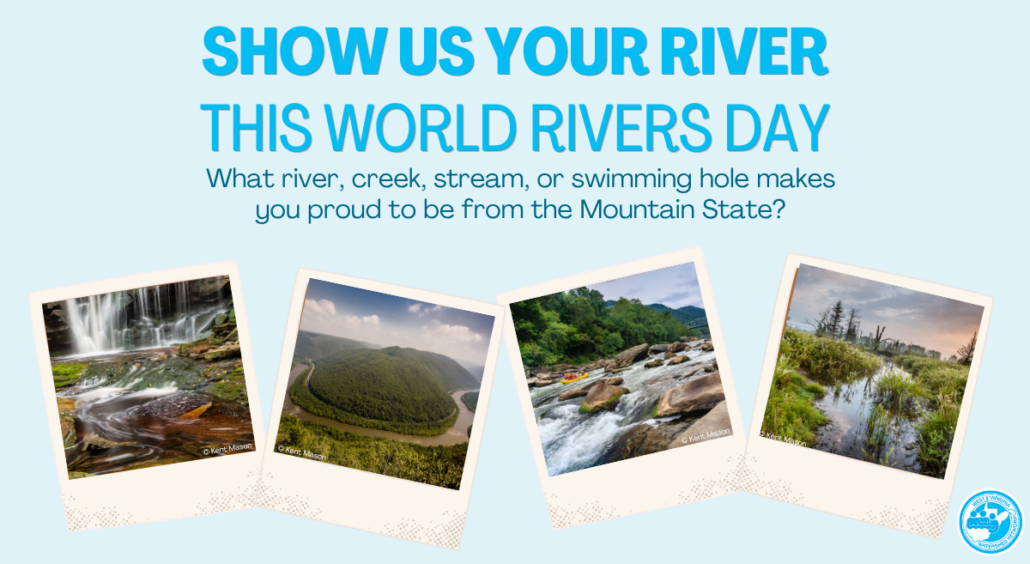
What river, creek, stream, or swimming hole makes you proud to be from the Mountain State? The West Virginia Watershed Network wants to see it and hear from you!
West Virginia is full of rivers and streams that mean something to the people who live here. For World Rivers Day on Sunday, September 27, the West Virginia Watershed Network is asking you to Show Us Your River.
What’s the WV Watershed Network? The West Virginia Watershed Network (WVWN) is composed of nonprofits as well as state and federal agencies who support the work of watershed groups to unify their communities and protect, restore, celebrate, and educate about their watersheds. To learn more about the support offered to watershed groups, sign up for the quarterly newsletter, WaterNet.
And there’s a little extra incentive: one participant will win a Camp Snap Pro camera to keep taking and sharing river photos.
Quick Takes: West Virginia’s Public Lands
Conservation Manager Mike Jones shares some quick takes from WV Public Lands.
1. Rebirth: A Waterway of Life: This summer, Conservation Manager Mike Jones has been traveling around the state with screenings of Rebirth: A Waterway of Life, sharing the story of the 16 Monongahela National Forest waterways that could receive permanent protection through Wild & Scenic River designation. This month took him to Marlinton, for their Mon Forest-focused First Friday with our partners at the Greenbrier River Watershed Association. At these screenings, community members have helped us fill out postcards to our federal leadership urging their support of the designation.
- The next screening is October 2 in Elkins during the opening of our “Create the Mon” gallery. RSVP here.
- Can’t make it to a screening? You can still help protect these special places. Add your name to the petition at wvwaterways.org.
2. National Public Lands Day: National Public Lands Day is Saturday, September 26! We’re celebrating the National Forests, National Parks and Preserves, National Wildlife Refuges, Wilderness Areas, U.S. Army Corps of Engineers Lands, State Parks, State Forests, and Wildlife Management Areas. We’re also celebrating the rivers, streams, and headwaters that run through them. We hope you will make plans to get out and enjoy these wild and wonderful places, too!
3. Comment Period Extended for Roadless Area Conservation Rule: There’s more time to speak up for West Virginia’s remaining roadless forests. The comment period on the proposal to eliminate the federal Roadless Area Conservation Rule has been extended through October 6. More than 1,565 people have already signed our petition, and we’re working toward a goal of 3,000 West Virginians. These forests protect headwaters, provide habitat, support outdoor recreation, and help keep our waters clean.
- Add your name and help us reach 3,000: act.wvrivers.org/a/roadless-rule
- Want to take your advocacy one step further? Submit a comment directly to the Federal Register in addition to signing our petition.
- Talk to your friends about this critical issue and ask them to sign the petition. We are also looking for people to write letters to the editor opposing the revocation of protections for Roadless Areas. Reach out to Mike Jones at mjones@wvrivers.org for more information.
Two Special Screenings of VS. GOLIATH: Appalachia
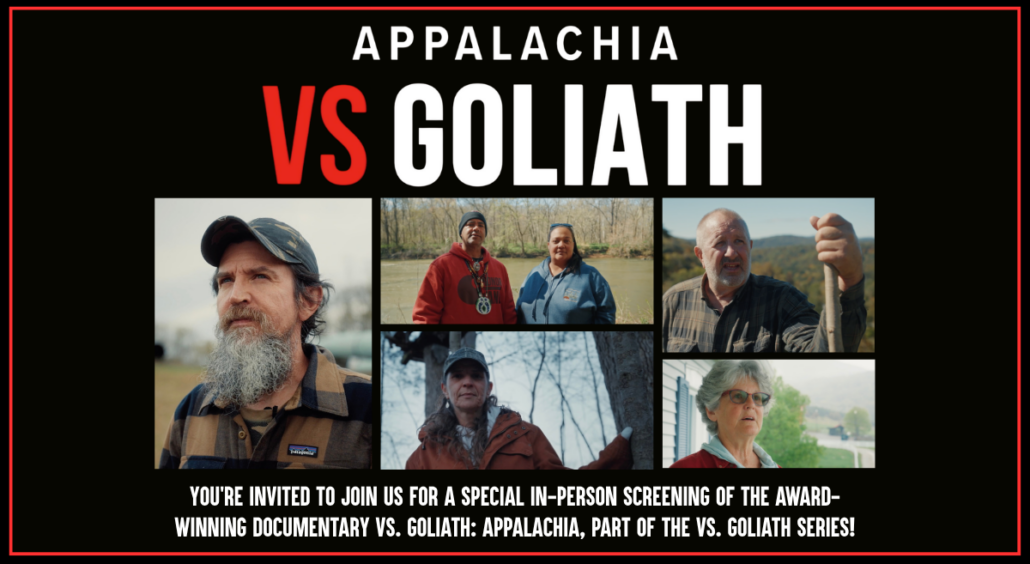
You’re invited to join us for a special in-person screening of the award-winning documentary VS. GOLIATH, featuring many of our partners in the resistance of the Mountain Valley Pipeline.
Join us for two special West Virginia screenings of VS. GOLIATH: Appalachia, part of the award-winning VS. GOLIATH four-part documentary series in Shepherdstown and Fayetteville.
Shepherdstown | Reserve your free ticket.
Wednesday, October 7
Shepherdstown Opera House (131 W German St., Shepherdstown, WV)
6 p.m. Doors & photo gallery opening
7 p.m. Film, followed by Q&A
Fayetteville | Reserve your free ticket.
Saturday, October 10
Thunder in the Mountains Native American Pow-Wow
Cantrell Ultimate Rafting (49 Cantrell Dr., Fayetteville, WV)
6:30 p.m. Doors & photo gallery opening
7 p.m. Film, followed by Q&A
The film follows an army veteran who joins his neighbors in opposing the Mountain Valley Pipeline, a massive gas pipeline cutting through their Appalachian community. It tells the story of farmers, veterans, Indigenous leaders, and other community members from West Virginia, Virginia, and North Carolina who came together to protect their homes and communities.
VS. Goliath is executive produced by award-winning actor and director Don Cheadle, The Solutions Project, the Equation Campaign, and Fossil Free Media, and produced by Tikkun Olam Productions.
Following each screening, we’ll hear from special guests for a Q&A and conversation about the film and the ongoing work to protect Appalachian communities.
We hope to see you there!