Updates from WV Rivers Coalition
August 2026
This summer has brought more than its share of challenges for West Virginia communities. As we’ve watched neighbors navigate flooding, water concerns, and uncertainty, we’ve also seen people come together to help one another and speak up for the places they call home. That spirit gives us a lot of hope and reminds us why this work matters.
At WV Rivers, we’re proud to stand alongside communities, partners, and supporters working for a healthier future for our rivers, our water, and our state. We couldn’t do this important work to protect our water, land, and people without each and every one of you. Here’s what we’ve been up to in the past month.
Saying Farewell to Kate Leary
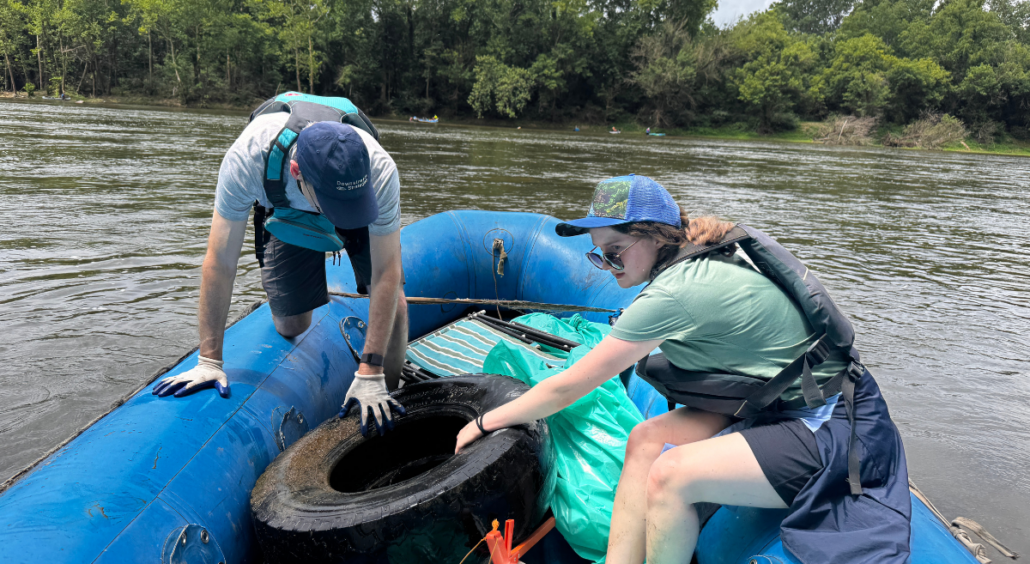
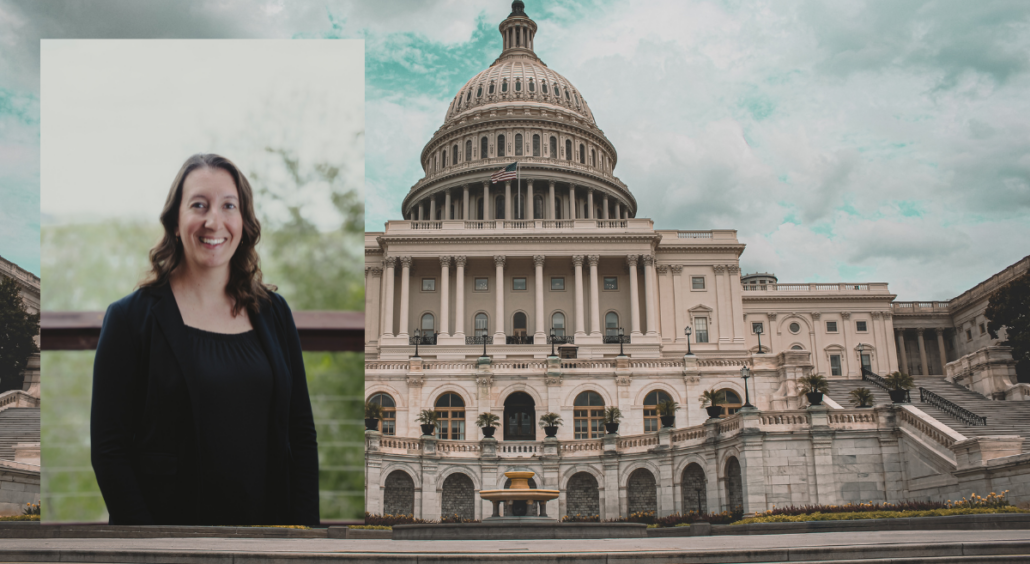
Kate Leary and Delegate Evan Hansen with a tire retrieved from the New River during a clean up last summer.
After five years with West Virginia Rivers Coalition, we’re saying goodbye to Kate Leary, our Operations Manager.
Since joining WV Rivers in 2021, Kate has been the person so many of us have relied on to keep things moving. Staff often call her the glue that holds us together, and it’s hard to think of a better description. Her ability to make sense of complex issues, ask exactly the right questions, and approach her work with level-headedness, compassion, and care has made WV Rivers stronger.
In her next chapter, Kate will join the Western Pennsylvania Conservancy as their Conservation Administrator for the Land Conservation department.
Kate shared, “West Virginia Rivers Coalition has played a huge role in my understanding of environment and conservation issues, and more importantly, what it looks like to really care and be committed to the work.”
Thank you, Kate, for five years of service in dedication to our mission. We’ll miss you tremendously — and we’ll be cheering you on from the Mountain State.
We’re now looking for our next Operations Manager to join the WV Rivers team. Learn more about the position and apply today.
Two More PFAS Community Meetings Scheduled for August
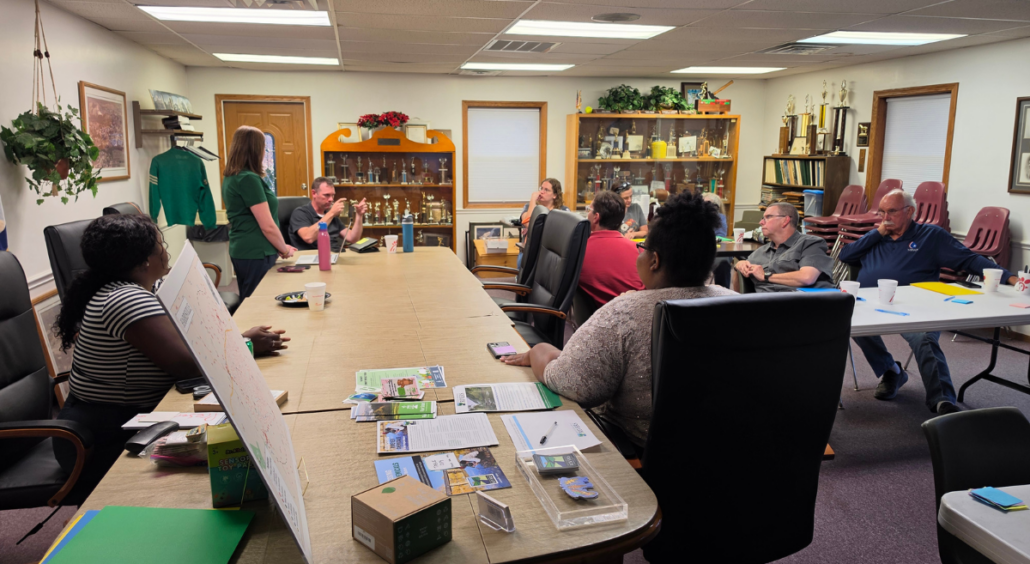
Here is a snapshot from our recent community meeting in Harrisville, WV.
Thank you to everyone who joined us for our recent PFAS community meetings with WV Department of Environmental Protection and Fair Shake Environmental Legal Services in New Haven, Harrisville, St. Marys, and Hurricane.
These gatherings have given residents a chance to learn more about PFAS, ask questions, and connect with others concerned about clean water in their communities.
Community Engagement Manager Carrie Decker reflected, “After these meetings, people have told me how much they’ve learned and how helpful it is to have clear information about PFAS and its known sources. They’re also able to share what they know about potential sources in their communities which helps inform the upcoming PFAS Action Plans and gives residents a meaningful role in shaping what comes next.”
We have two more meetings coming up. All attendees will receive a $25 gift card for their participation. Additionally, food and drinks are provided!
Please tell a friend and join us in:
- Walton on Tuesday, August 25 from 6–8 p.m. at the Walton Community Building, or
- Moorefield on Thursday, August 27 from 6–8 p.m. at the Main Street Gallery and Art Center.
West Virginia Is Flooding Again. We Need a Different Approach.
Many streets on Charleston, West Virginia’s West Side, including Greendale Drive, experienced severe flooding on Sunday, Aug. 16, 2026. (Photo by Leann Ray/West Virginia Watch)
More flooding has hit West Virginia this week, with communities in Fayette, Kanawha, Raleigh, Nicholas, and Braxton counties impacted by severe weather and flooding. This follows the June flooding that devastated parts of Lewis and Upshur counties. Every county in West Virginia remains under a state of emergency.
Our hearts are with people across the state who are dealing with floodwaters and the destruction it causes.
For communities in need of assistance, call 2-1-1 for help connecting with local resources, including food, shelter, housing, financial assistance, and other disaster-related support. You can also text your ZIP code to 898-211.
Damage assessment: WV VOAD (West Virginia Voluntary Organizations Active in Disaster) is collecting information about flood damage to help connect communities with assistance: https://survey123.arcgis.com/share/de033ec0327f4a5db41884eb5fc0974b
West Virginia has experienced 23 federally declared disasters since 2011, costing taxpayers more than $950 million. So, as communities recover, we also need to keep asking a bigger question: How can we better protect Appalachian communities from future floods?
The 2027 legislative session is an opportunity to move beyond “recovery on repeat” and make long-term investments that protect communities, reduce disaster costs, and strengthen West Virginia’s future.
That means conducting a comprehensive statewide flood study to understand where our communities are most vulnerable and what will have the greatest impact. West Virginians need our leaders to prioritize sustained investment in flood protection infrastructure, increased funding for flood prevention, and real movement on nature-based hazard mitigation — including restoring floodplains and protecting the landscapes that can help slow and absorb floodwaters.
On Thursday, August 27 at 1 p.m. ET, we hope you will join us for the next Appalachian Flood Resilience Coalition webinar, focused on nature-based hazard mitigation and how restoring and protecting our landscapes can help reduce flood risks. Register here.
If you missed the last webinar, “Responding While Recovering — Storm Recovery Futures Amid Ongoing Disaster,” you can watch the recording here.
Action Needed: Speak Up for West Virginia’s Roadless Forests
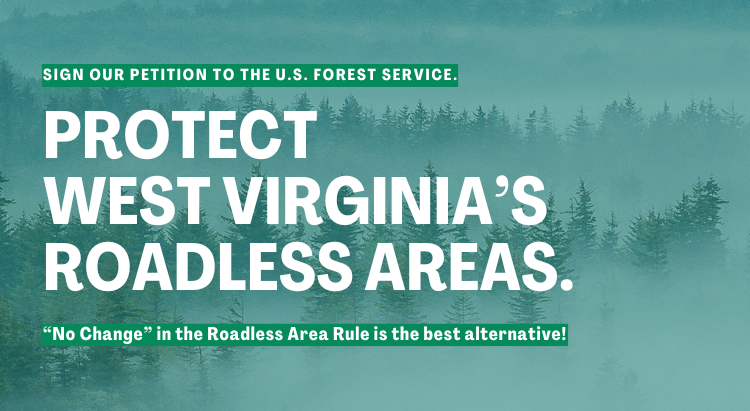
Sign the petition to the U.S. Forest Service telling them that “No Change” in the Roadless Area Rule is the best alternative!
The current administration is proposing to repeal the Roadless Area Conservation Rule, a policy that has protected nearly 45 million acres of national forest lands from most new road construction and commercial logging since 2001.
Here in West Virginia, that includes about 182,000 acres of roadless forest across the Monongahela and George Washington and Jefferson National Forests. These areas include some of our most treasured landscapes, such as Roaring Plains, Seneca Creek, Cheat Mountain, Canaan Loop, Tea Creek, North Fork Mountain, and Hills Creek Falls.
Roadless forests protect clean drinking water, provide habitat for wildlife, and offer places for people to hike, fish, hunt, paddle, and find quiet and solitude. They are also important to the health of the streams and rivers that flow through them.
The Forest Service released its draft Environmental Impact Statement on the proposed repeal on August 20, opening a public comment period through September 21. We will add YOUR name to our Comment Letter opposing the revocation of this important Forest protection.
Please click the button below and sign our petition to the Forest Service telling them that West Virginia’s roadless forests are worth protecting and that the Roadless Area Conservation Rule should remain in place.
You can also add a public comment directly to the Federal Register at this link.
New River Conservancy Names WV Rivers “Advocacy Group of the Year”
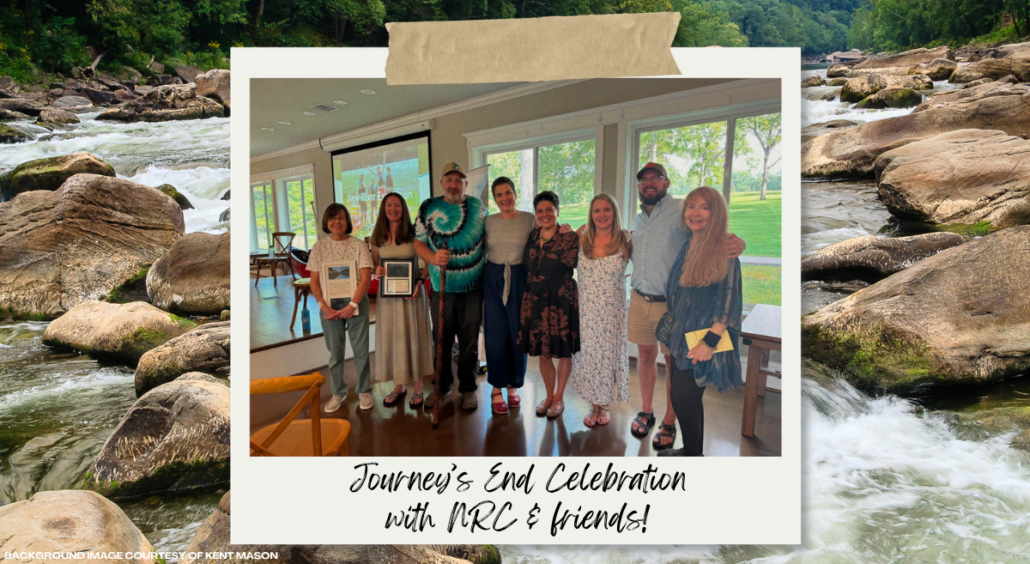
Awardees and supporters gather for a group photo at the New River Conservancy’s Journeys End event. From left to right, Eve West, Jennifer Flippin, Maury Johnson, Jennie Smith, Katherine McGraw, Carrie Decker, Andrew Downs, and Roseanna Sacco.
We’re honored to have been recognized by the New River Conservancy with the Wallace & Peggy Carroll Vigilance Award for Advocacy Group of the Year.
The award recognizes groups whose advocacy helps protect the New River through education, outreach, organizing, and work to influence policies and decisions affecting the river.
The New River Conservancy recognized WV Rivers for our partnership in protecting the watershed, including participating in New River cleanups, helping with Conservation Day at Grandview State Park, and showing up again and again for the river.
We’re proud to share this recognition with Jennifer Flippin (Aquatic Ecologist with the National Park Service) who received the WV Volunteer of the Year Award, and Eve West (Chief of Interpretation for New River Gorge National River, Gauley River National Recreation Area, and Bluestone National Scenic River) who received the Doug Blatney Public Service Award.
We’re grateful to the New River Conservancy for this acknowledgement — and even more grateful for the partnership that makes this work possible.
Know Your Water: Building Community Power in Welch
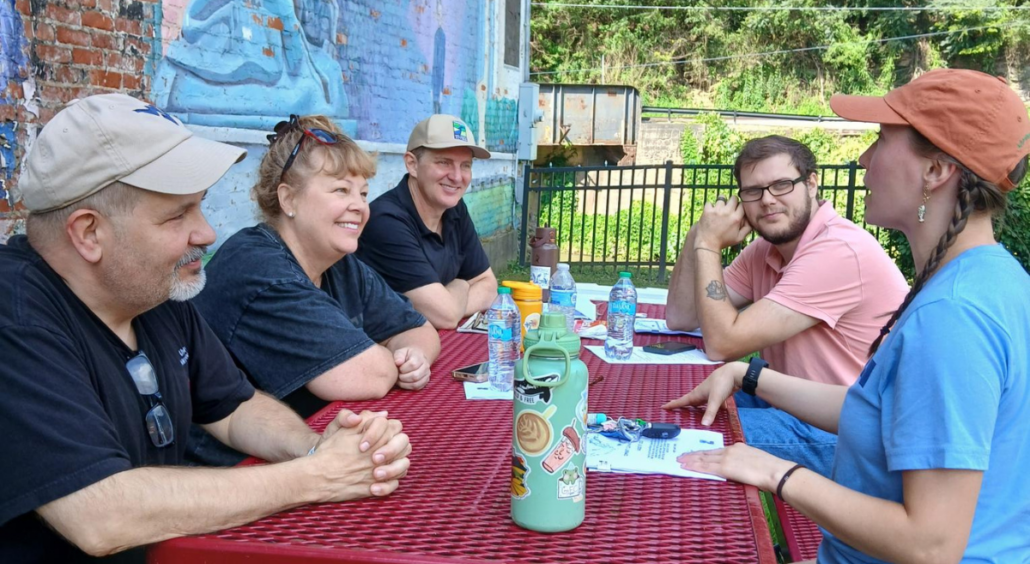
Attendees at the Welch training.
Last week, Senior Scientist Than Hitt and Southern WV Coordinator Katherine McGraw with WV Rivers and Co-Director Rev. Brad Davis with From Below: Rising Together for Coalfield Justice hosted a free community workshop in Welch focused on understanding water protections and building the tools communities need to advocate for clean water.
Participants learned about the Clean Water Act, Safe Drinking Water Act, water monitoring basics, and tools for community action. They also brought water samples and learned more about what they can do to understand and protect the water in their communities.
This workshop was the first we have hosted on this topic and our team is working to plan more to empower community members with the information and tools they need to ask questions, document problems, and advocate for their waters.
Rebirth: Wild & Scenic Headwaters
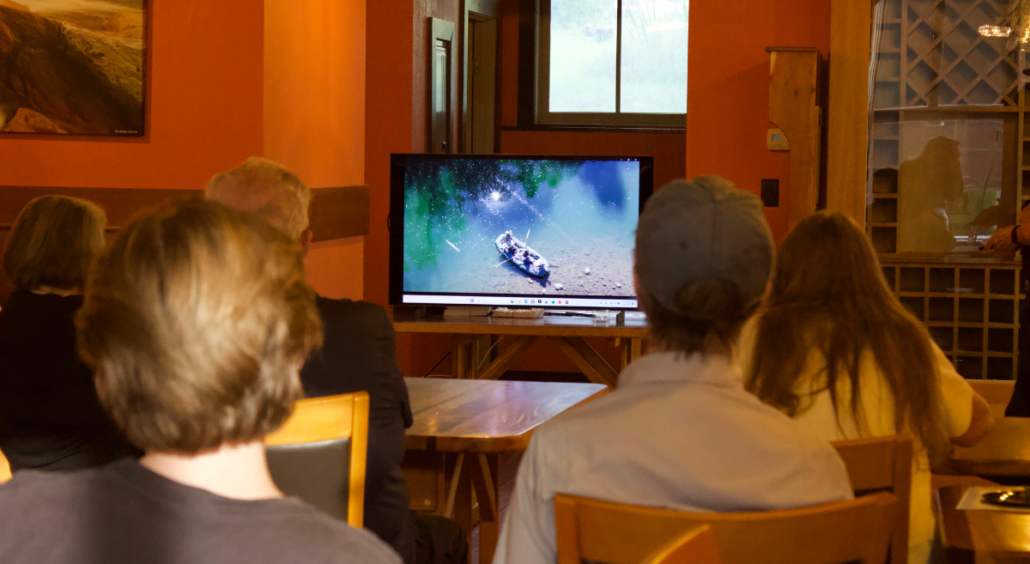
Folks gathered in Thomas, WV, for our second debut screening. (Photo courtesy of Christa Clasgens/Silver Hen Fly Co.)
This month, we brought rebirth: wild & scenic headwaters to audiences in Richwood and Thomas, sharing the story of the remarkable headwater streams of the Monongahela National Forest.
The screenings gave community members a chance to learn more about these waterways and the growing effort to permanently protect them.
After viewing the film, attendees have helped us write nearly 100 post cards to our federal delegation so far!
These streams provide drinking water to millions of people, support rare species like the Candy Darter and Hellbender, and help sustain West Virginia’s outdoor recreation economy. Sixteen are recognized by the U.S. Forest Service as eligible for Wild & Scenic River designation.
More screenings are coming up in Marlinton and Elkins. Stay tuned for details. We can’t wait to share this film with you!
Last Call: Create the Mon
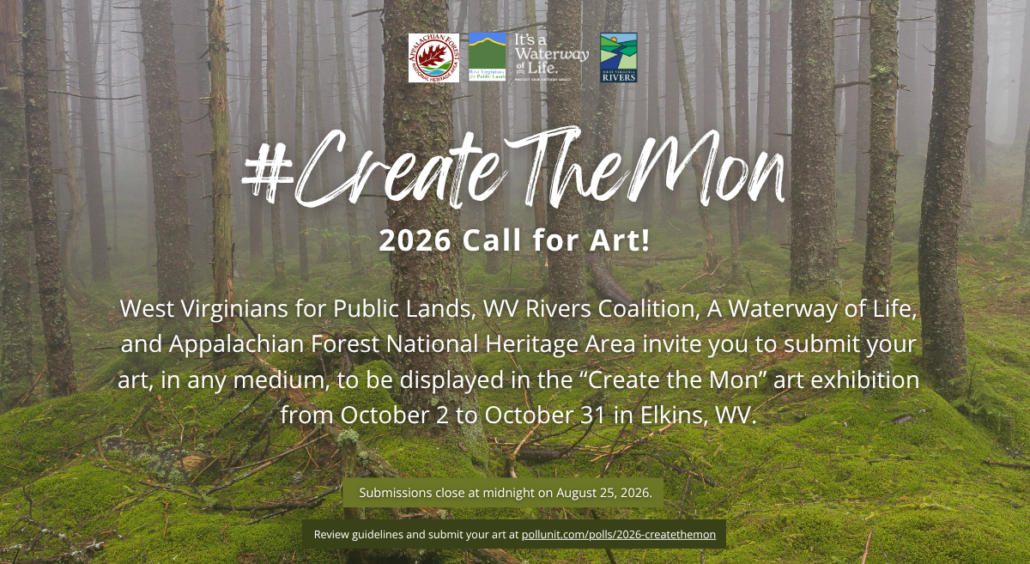
West Virginians for Public Lands, WV Rivers Coalition, A Waterway of Life, and the Appalachian Forest National Heritage Area invite you to submit your art, in any medium, to be displayed in the “Create the Mon” art exhibit.
Artists, this is your last call!
Create the Mon celebrates the Monongahela National Forest and the ways artists are inspired by this incredible landscape. Any medium is welcome, and you’re invited to submit work you’ve created specifically for the exhibit — or work you’ve submitted in the past.
Our next exhibit will be held in Elkins from October 2–31. Submissions are due by midnight on August 25.
We can’t wait to see how the Mon Forest inspires you.
Leaving a Legacy for Clean Water
August is Make-A-Will Month. This is a good reminder for us to put our wishes in writing and make a plan for the future.
Did you know you can include WV Rivers Coalition in your estate plans? This Make-A-Will Month, we are sharing resources to help make sure the people, places, and causes you care about are supported for years to come.