
FOR IMMEDIATE RELEASE
June 24, 2026
Contact
Lacey McCormick, National Wildlife Federation, mccormick@nwf.org, 512-610-7765
Maggie Stange, West Virginia Rivers Coalition, mstange@wvrivers.org, 304-637-7201
Study shows Clean Water Act rollbacks risk Charleston drinking water supply
CHARLESTON, W. Va. (June 24, 2026) — Sixty-five percent of Charleston’s drinking water supply comes from streams that are now unprotected by the Clean Water Act, according to a new analysis done by researchers at Yale and the University of Massachusetts.
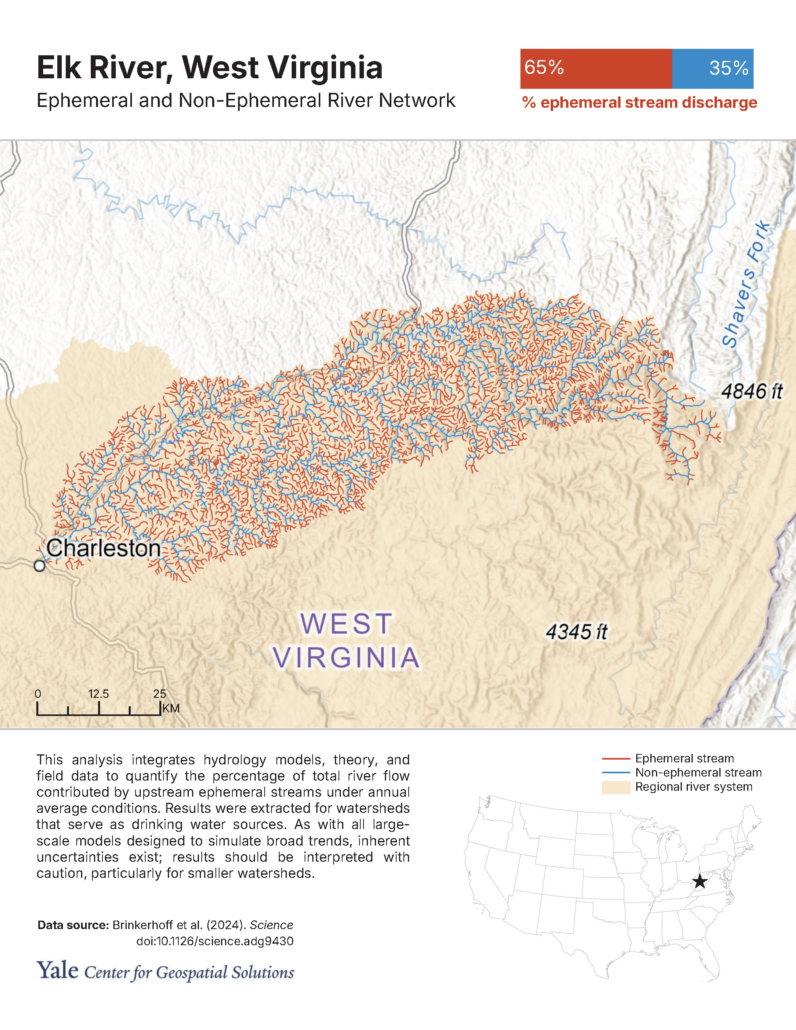
Resource: Elk River Watershed Map. Streams in red are unprotected by the Clean Water Act.
The Supreme Court ruled in 2023 that streams can only be protected under the federal Clean Water Act if they are “relatively permanent,” which excludes ephemeral streams that only flow after rainfall or snowmelt.
“In West Virginia’s mountains, water moves through a network of small streams before reaching the rivers we depend on for drinking water,” said Autumn Crowe, Deputy Director of the West Virginia Rivers Coalition. “These may look small on a map, but collectively they have an enormous impact on downstream water quality. Losing protections for these waters puts our communities and their access to safe water at further risk.”
The new map of headwater streams that flow into the Elk River were built using models originally developed for a nationwide study of ephemeral streams published in the journal Science.
“Our research shows that small streams exert a meaningful influence on downstream, larger rivers, including systems that supply drinking water,” said Craig Brinkerhoff, a river scientist and engineer at Yale. “All of these waters are connected and if enough of these streams were polluted or damaged in a mountainous watershed like the Elk, it could potentially impact Charleston’s drinking water supplies over the long run.”
The EPA is currently finalizing a rule determining which kinds of streams and wetlands are protected by the Clean Water Act, and which are not. The final rule may exclude additional streams not included in this analysis.
The new EPA rule also excludes 96 percent of the state’s wetlands from protection under the Clean Water Act, according to the agency’s draft impact analysis. Wetlands are also critical for protecting drinking water quality as they trap and filter out pollutants before sending cleaner water downstream.
West Virginia’s drinking water infrastructure was recently rated a D+ by the American Society of Civil Engineers due to challenges including aging systems, leaky distribution pipes, and a funding gap of nearly a billion dollars.
Many West Virginians have experienced drinking water contamination firsthand. From the 2014 chemical leak into the Elk River that left 300,000 people without safe water to the communities in the southernmost counties who have to haul in clean water so they can cook, bathe, and drink.
“It’s much cheaper to protect these streams from pollution at the source, rather than trying to make the water safe through high-cost treatment methods,” Crowe said. “As we continue to seek funding for long-overdue water infrastructure improvements, we shouldn’t abandon headwater stream protections that provide clean water to downstream communities.”
In the Upper Elk Watershed, many of those streams are located in areas with current or historic mining activity, making Clean Water Act protections especially important.
EPA’s analysis acknowledges that loss of protections for these streams could increase the cost to treat raw water to drinking water standards.
“These Clean Water Act rollbacks increase the risk of unsafe tap water and can increase the cost to consumers,” said Jessie Ritter, Associate Vice President of Water Policy at the National Wildlife Federation. “It’s a double-whammy that we are losing these longstanding protections at the same time the President’s budget proposes deep cuts to water treatment funding.”
Additional Resources:
###